If you’ve been considering straightening your teeth, you’ve likely wondered whether clear aligners could work for you. The good news is that many people are excellent candidates for this popular orthodontic treatment.
Let’s explore what makes someone a good candidate for clear aligner treatment and help you determine if this path might be right for you.
Understanding Clear Aligner Treatment
Clear aligners have revolutionized orthodontic care by offering a nearly invisible way to straighten teeth. Unlike traditional braces with metal brackets and wires, these custom-made plastic trays gradually shift your teeth into proper alignment.
The most well-known brand, Invisalign®, has helped millions achieve their dream smile without the aesthetic concerns that come with metal braces.
Another popular option, ClearCorrect®, also provides effective clear aligner solutions with its own unique approach to treatment planning and fabrication.
This orthodontic treatment works through a series of clear, removable trays that you wear for 20-22 hours daily. Each tray moves your teeth slightly, and you progress through multiple sets over your treatment period.
Who Makes a Good Candidate for Clear Aligners?
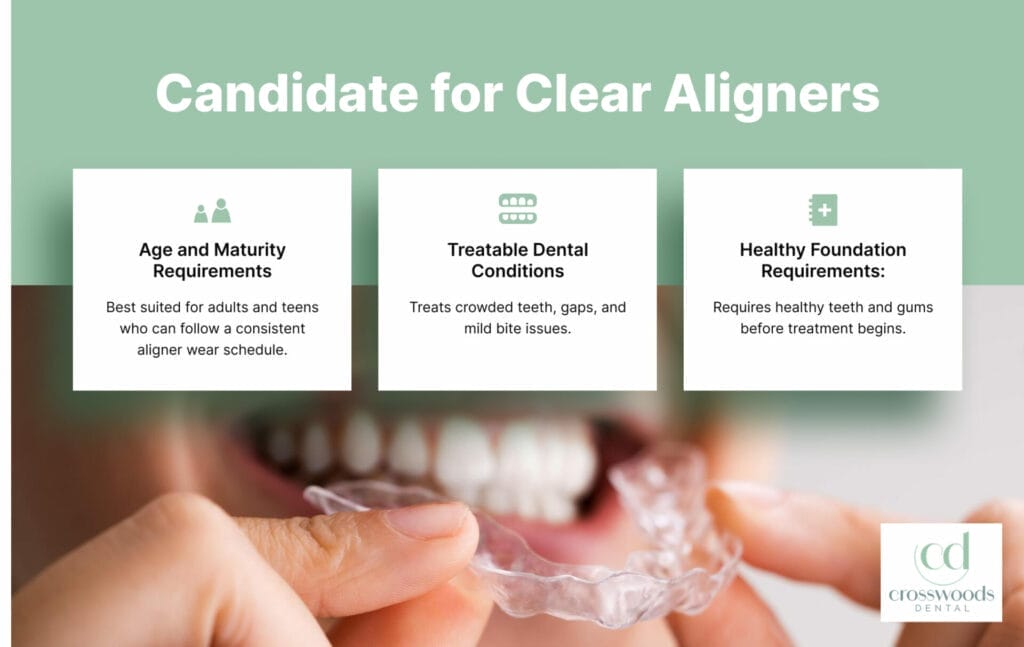
The ideal candidate for clear aligner treatment typically has mild to moderate orthodontic issues. Your dental health plays a crucial role in determining eligibility. Here’s what dentists look for when evaluating patients:
Age and Maturity Requirements
Adults and teens often make excellent candidates because they can follow the strict wearing schedule required for best results. The treatment demands discipline since the aligners are removable.
Treatable Dental Conditions
People with specific dental issues respond well to aligner treatment. These include crowded teeth, gaps between teeth, mild overbites, underbites, and crossbites. Many orthodontic issues that once required traditional braces can now be addressed with clear aligners.
Healthy Foundation Requirements
Patients with good oral health are prime candidates. Before starting any orthodontic treatment, your mouth needs to be free from active decay and gum disease. Clean teeth and healthy gums provide the foundation for successful treatment.
Dental Conditions That Work Well with Clear Aligners
Clear aligners effectively treat numerous dental issues that affect both function and appearance:
- Crooked teeth and mild crowding respond exceptionally well to gradual pressure from aligners
- Gaps and spacing close predictably with proper treatment planning
- Mild bite issues, including slight overbites and underbites, often improve significantly
- Relapsed teeth from previous orthodontic work frequently straighten again with aligner treatment

When Traditional Braces Might Be Better
While clear aligners work wonderfully for many patients, some orthodontic conditions require the constant force that only traditional braces provide. Complex bite issues, severe crowding, or significant tooth rotations sometimes need the precision control that metal braces offer.
Your dentist will honestly discuss whether clear aligner treatment can address your specific needs or if traditional braces would deliver better results for your situation.
The Importance of Oral Health Before Treatment
Excellent dental health forms the foundation of successful orthodontic treatment. Before beginning clear aligner therapy, your dentist will ensure your mouth is healthy and ready.
Gum disease must be treated and controlled before starting aligners. Inflamed gums don’t respond well to the pressure needed to move teeth, and untreated periodontal issues can worsen during orthodontic treatment.
Existing dental work, like fillings, crowns, or bridges, doesn’t automatically disqualify you from treatment. However, your dentist needs to evaluate how these restorations might affect your treatment plan.
Active decay requires treatment before orthodontic work begins. Moving teeth over cavities can lead to complications and poor outcomes.
What to Expect During Your Consultation
Your journey starts with a comprehensive evaluation where your dentist assesses your candidacy for clear aligner treatment. This appointment involves several important steps:
Your dentist will examine your teeth, gums, and bite to identify orthodontic issues that need correction. Digital scans or impressions help create a detailed treatment plan showing how your teeth will move over time.
Discussion of your goals and expectations ensures that the clear aligner treatment aligns with your desired outcome. Your dentist will explain what results you can realistically expect and how long treatment typically takes.
A review of your dental health history helps identify any factors that might affect treatment success. Your dentist needs to understand any previous orthodontic work, dental procedures, or ongoing oral health concerns.
Lifestyle Factors That Affect Success
Clear aligner treatment requires commitment and lifestyle adjustments that traditional braces don’t demand. Consider these factors when deciding if you’re a good candidate:
Compliance
Compliance matters tremendously. You must wear aligners for 20-22 hours daily to achieve best results. People who travel frequently, have irregular schedules, or tend to forget routines might struggle with this requirement.
Social Activities
Social activities like frequent business meals or social events where you remove aligners often can slow progress. While aligners are removable for eating and drinking, extended removal periods affect treatment effectiveness.
Oral Hygiene Habits
Oral hygiene habits become even more important during Invisalign® treatment. You must brush teeth after meals before reinserting aligners to maintain dental health throughout treatment.
Age Considerations for Clear Aligner Treatment
Both teens and adults can be excellent candidates for clear aligner treatment, though each age group has unique considerations.
Teen Patients
Teen patients often love the aesthetic advantage of clear aligners over metal braces. However, they need maturity to handle the responsibility of wearing and caring for removable aligners. Teen versions of Invisalign® include compliance indicators to help parents monitor wear time.
Adult Patients
Adult patients frequently choose clear aligners because professional appearance matters in their careers. Adults typically have better compliance rates but may have more complex orthodontic issues or existing dental work that affects treatment planning.
Is Clear Aligner Treatment Right for You?
Determining if you’re a good candidate for clear aligner treatment involves an honest evaluation of your orthodontic needs, lifestyle, and commitment level. The best approach is scheduling a consultation with a qualified dentist who offers this treatment option.
During your visit, discuss your concerns openly. Ask about expected treatment time, costs, and what results you can realistically expect. Your dentist will review your specific orthodontic issues and explain whether clear aligners can address them effectively.
Remember that successful orthodontic treatment depends on choosing the right approach for your unique situation. Whether that’s clear aligners, traditional braces, or another option, the goal remains the same: achieving optimal dental health and a confident smile.
Taking the Next Step
If you’re wondering whether you’re a candidate for clear aligners, the best way to find out is through a professional evaluation. Contact your dental office to schedule a consultation and take the first step toward the smile you’ve always wanted.
Clear aligner treatment has helped countless patients achieve beautiful, straight teeth with minimal impact on their daily lives. With proper evaluation and realistic expectations, you might discover that you’re an ideal candidate for this innovative orthodontic solution.